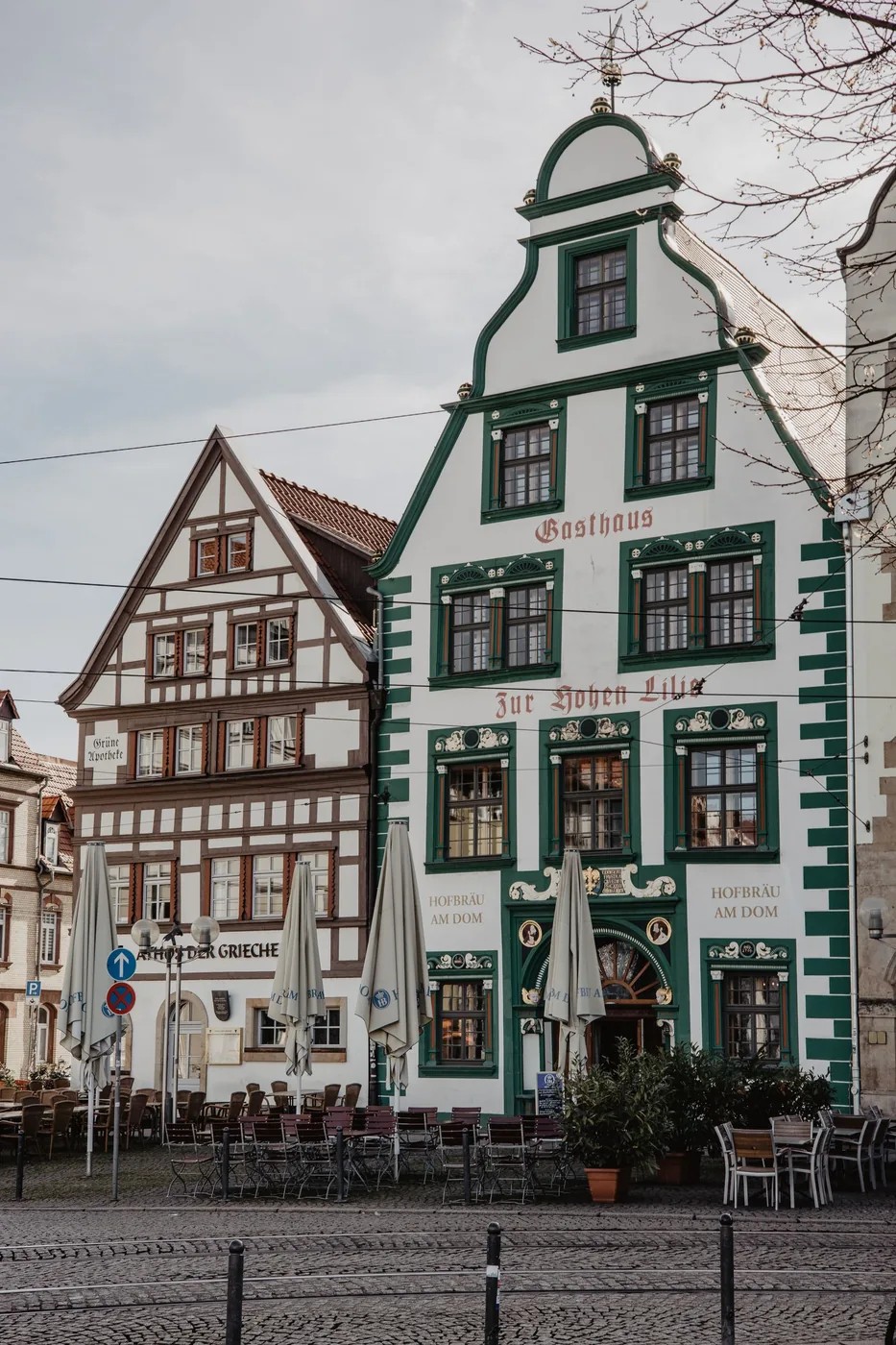
Thuringian food is rooted in simple ingredients, seasonality and shared meals. Potatoes, meat, cabbage and regional herbs tell stories of the landscape and generations of work.
The potato as a starting point
The best-known example is Thüringer Klöße: large potato dumplings usually served with roast meat and sauce. Recipes vary between families, with the balance of raw and cooked potatoes determining the result.
It is a dish that rewards experience. Its value lies not in a long list of ingredients, but in inherited technique and the patience required to prepare it well.
Rostbratwurst — a regional flavour
Thüringer Rostbratwurst is one of the region’s best-known symbols. Usually grilled, its character comes from the seasoning and the quality of the meat. Served simply in a roll or with mustard, it shows how everyday food becomes part of regional identity.
The most interesting stories begin not with the name, but with the people: butchers, small restaurants and families who have maintained their own versions over many years.
The table as a meeting place
Regional food remains alive when it is not treated as a museum exhibit. Local products can appear in modern restaurants, family-run inns and events while retaining their connection to place.
On film, food is best shown through process: hands preparing dough, the sound of the grill, conversation around the table and the origin of the ingredients. Taste is invisible, but images can build emotion around it.